Use YouTube Analytics to Choose Your Next Video
Combine viewer questions, traffic sources, and performance patterns to find your next useful YouTube topic.
Analytics can show what people found and how they responded, but the creator still has to decide what is worth making. Pair the numbers with the audience’s actual questions and your ability to produce a strong answer.
Use three signals to greenlight a topic
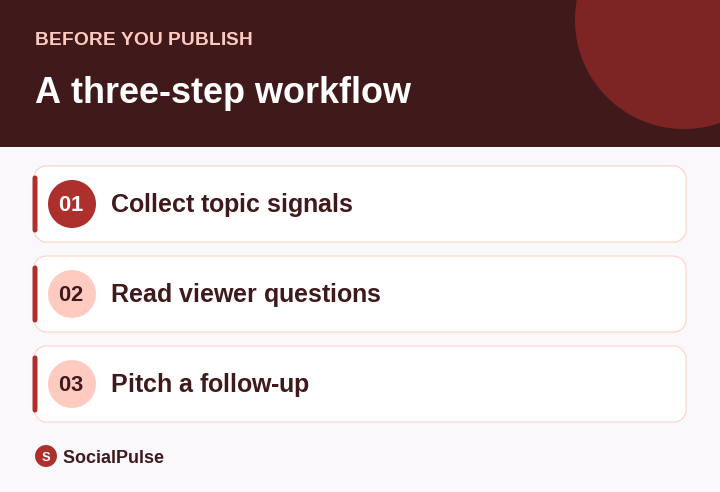
List topics from recent videos, search terms when available, and repeated viewer questions. Give a proposed follow-up a check for each source of evidence. A single breakout upload is a lead to investigate.
Worked example
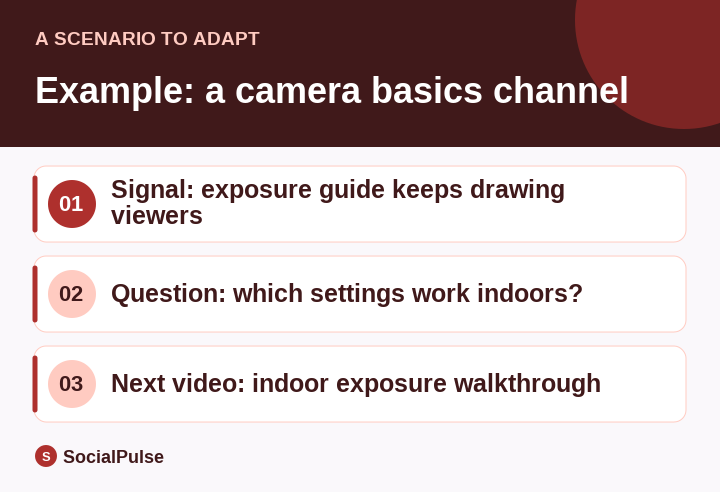
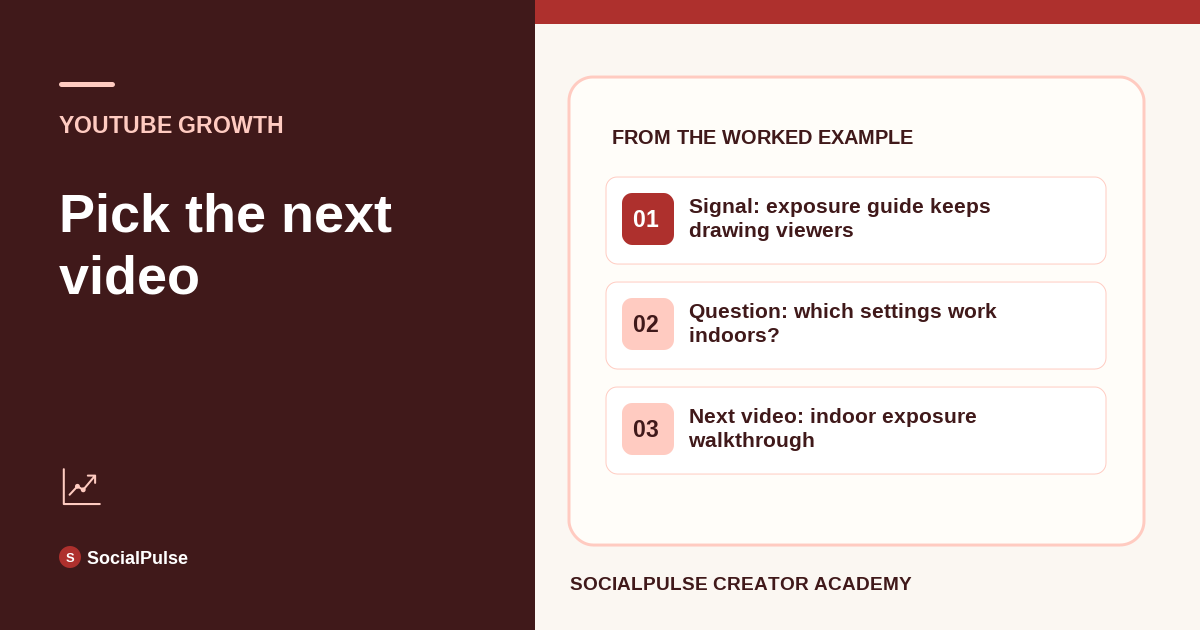
An indoor camera guide earns recurring search traffic and viewers ask how to avoid flickering lights. That suggests a follow-up showing matching shutter settings and lighting, with a side-by-side result viewers can recognize.
What to do with the result
Write a title and first shot before committing to production. If both are vague, narrow the use case. Compare the follow-up with similar tutorials at the same age.
Start with a content question
Look for a topic that has earned meaningful comments, search discovery, or repeat viewing. Ask whether the video solved the question fully or left a sensible follow-up. The next upload should add something, not merely repeat the same headline with different wording.
Read packaging and viewing together
Impressions and click-through behavior describe whether the packaging invited a choice in the contexts where YouTube showed it. Retention and watch patterns add a different view of what happened after the click. Interpret each metric within its traffic source and audience.
Make a decision you can act on
Turn the finding into a brief: audience, question, angle, proof or demonstration, and next step. If the audience responded to a clear comparison, plan another comparison with a different decision. If viewers left when the explanation began, rethink the structure before recording again.
A working guide for your next session
Start with a specific channel question
Decide whether you are examining discovery, packaging, watching, or the next action. Impressions and click-through can help you think about discovery and packaging; watch time and retention help examine viewing. The exact metrics available depend on the channel and product. Pick the question first so you do not turn every dashboard number into a goal.
Compare videos that serve similar viewers
Group videos by subject, format, and audience expectation, then compare them over a similar period after publication. A new series may need more time to find its audience than a familiar topic. Note external factors and packaging changes. The comparison will not prove what caused a result, but it can help you form a more useful next test.
Turn one finding into a brief
Write a short brief with the viewer, question, promise, evidence, and one improvement informed by the last video. For example, if viewers responded to a clear demonstration, make the next one answer a more specific follow-up question. Keep the creative idea central; analytics should sharpen the brief rather than dictate a copy of the previous upload.