Design a TikTok Content Strategy Around One Clear Audience
Give TikTok videos a consistent point of view while testing formats that make your ideas easier to understand.
A TikTok strategy does not need to make every video look alike. It needs to make the creator’s perspective recognizable. When a viewer understands the kind of value you offer, each new video has a clearer reason to earn their attention.
Write an episode promise viewers can recognize
Choose one problem a viewer runs into repeatedly. Make three episodes that each resolve one version of the problem. Give each episode a concrete result in the first shot and a consistent naming pattern in your notes.
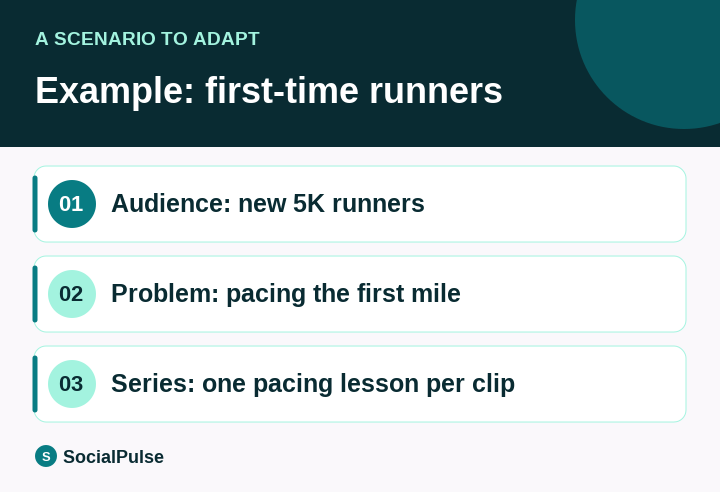
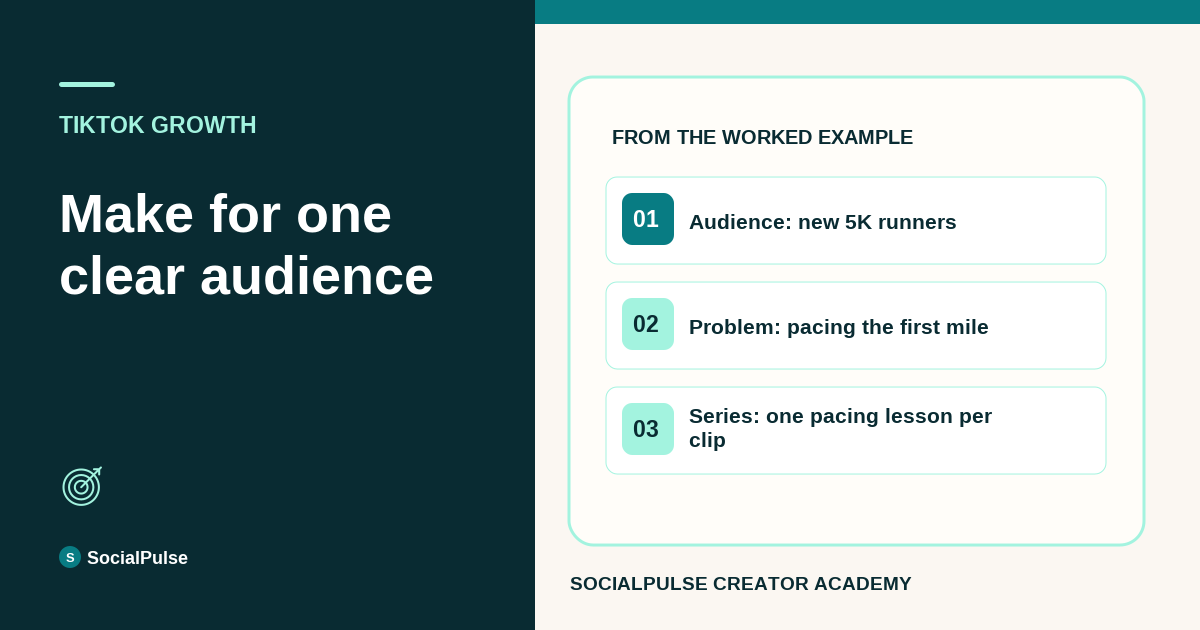
Worked example
For new 5K runners: “pace the first hill,” “run without checking your watch,” and “recover after starting too fast.” All three serve the same viewer without reusing the same clip.
What to do with the result
Compare the questions people ask after each post. Turn an unanswered question into episode four if it fits the original audience. Save unrelated ideas for a separate series.
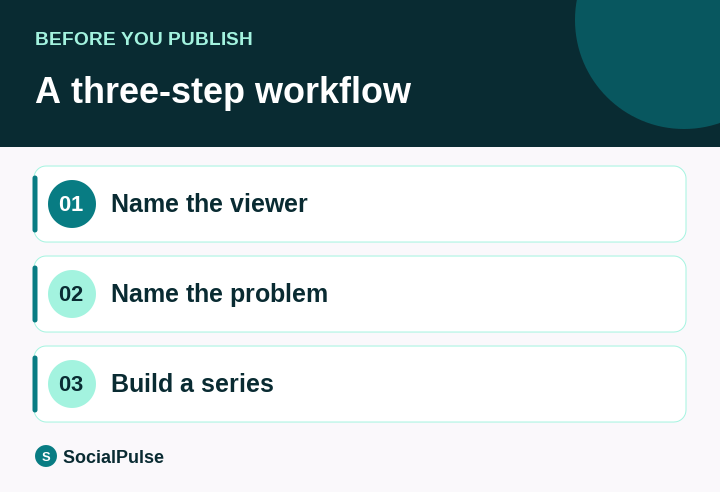
Name the viewer and the situation
Be precise about the moment your video helps with: choosing a camera, fixing a recipe, learning a phrase, or staying motivated during practice. Situations generate stronger ideas than demographic labels because they point to a real question someone might watch to answer.
Build a few repeatable series
A series reduces the blank-page problem. Try “one mistake and its fix,” “what I would do differently,” or “answering a viewer question.” Keep the structure familiar but vary the example and the conclusion. A series should make production easier, not turn each video into a clone.
Balance discovery with relationship
Some videos can introduce your topic to new viewers; others can deepen the connection with people who already know you. A quick, self-contained tip may travel broadly, while a follow-up or personal reflection rewards returning viewers. Decide which job each idea performs before you script it.
A working guide for your next session
Start with viewer situations, not trend lists
Write down the moment when someone would need your video: before trying a recipe, while choosing a budget microphone, or after getting stuck on a design tool. Those situations lead to more durable ideas than a list of sounds. Look for repeated questions in comments, support conversations, search suggestions, and your own work. A clear situation gives you a natural opening and helps you decide whether a trend strengthens the idea or distracts from it.
Give each video one job
A short video can teach one step, show a transformation, tell a compact story, or invite a specific response. Trying to explain an entire subject in one clip often creates a rushed list with no clear payoff. Write the central takeaway in one sentence, then remove details that do not help the viewer understand or use it. If the topic needs several steps, make a short series and label each part so viewers know where they are.
Build a repeatable filming workflow
Keep a running idea list, then group ideas by location, props, or format so filming several pieces together actually saves time. Draft the first spoken line and the final takeaway before recording. Capture a clean main take, then add close-ups or screen recordings only where they make the explanation clearer. Check captions, sound levels, framing, and on-screen text on a phone before publishing; small readability problems are easy to miss on a desktop editing screen.
Review retention and response together
Use the analytics available to you as clues, not a verdict on your talent. If viewers leave early, check whether the opening matches the promise of the video. If they stay but do not respond, ask whether the payoff is complete or the next step is unclear. Compare videos with similar jobs and topics. Keep a short note about the change you will try next; changing the hook, length, topic, and editing style all at once makes the result difficult to learn from.