Repurpose Content Without Making Every Platform Feel the Same
Adapt a strong creator idea for different formats by changing the emphasis, context, and audience experience.
Repurposing saves research time, but a direct copy can feel out of place when people use each platform differently. Keep the core insight and redesign the way it is presented.
Keep the idea, rebuild the opening
Pull the main idea out of a long piece and write one sentence that stays true across formats. For each destination, decide whether the viewer needs a proof clip, steps to save, or the full detail.
Worked example
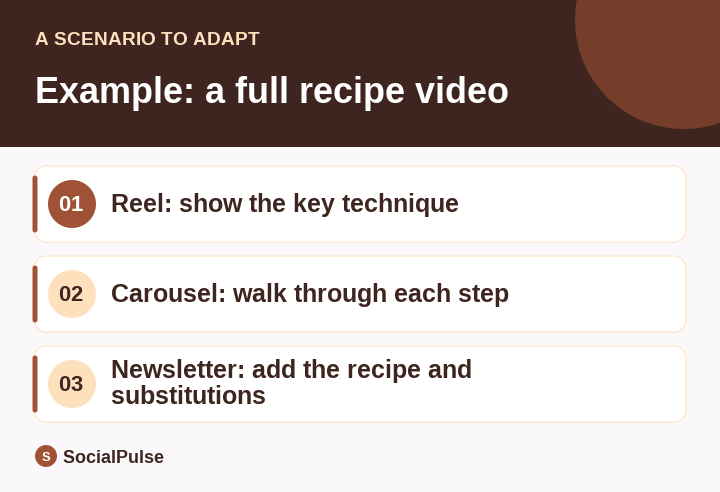
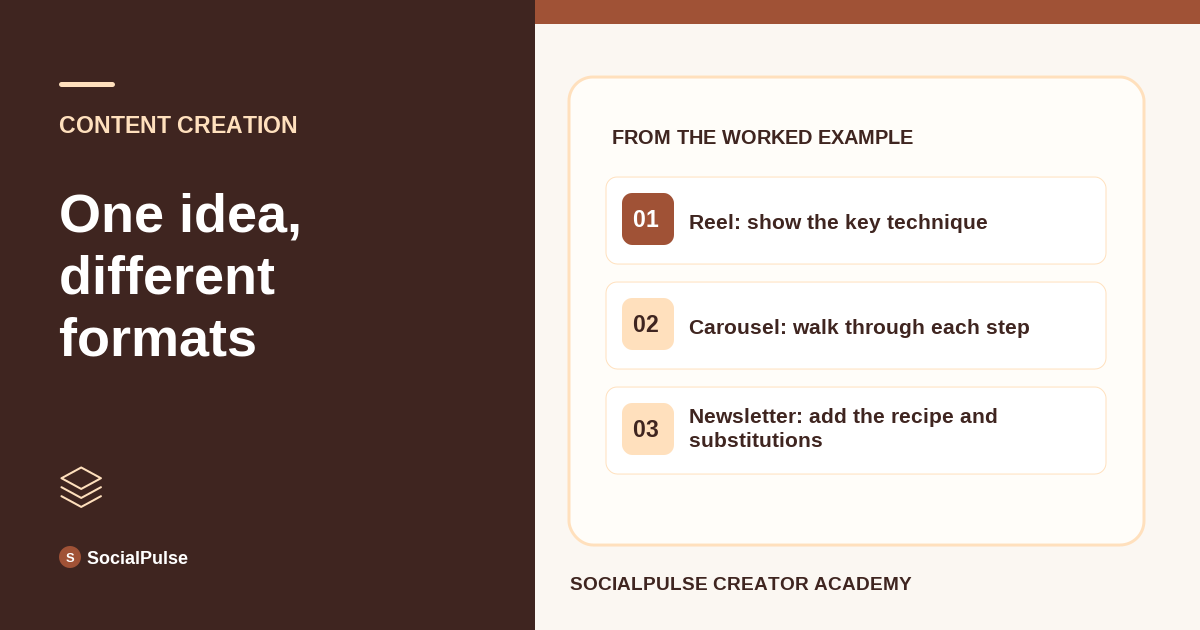
A gear-cleaning video becomes a Reel showing one before-and-after, a carousel of the cleaning order, and a newsletter that explains which tools are safe for each surface. Each piece starts with its own payoff.
What to do with the result
Check whether a person could learn something from each version independently. If two pieces share the same opening and ending, give one a different job.
Start from the useful idea, not the file
Choose an idea that still matters after the original post is finished. Pull out the question, evidence, and takeaway. Then choose whether a new format should teach a step, show a process, or tell the story behind the result.
Respect the format and its audience
A short vertical video might lead with one demonstration; a longer YouTube video can explain the reasoning and exceptions; a text post can summarize the decision for people who prefer reading. Recheck aspect ratio, captions, length, and context before publishing.
Add something new each time
The adaptation should answer a follow-up or make the idea easier to apply. If there is no new value, link to the original or wait until you have a fresh angle. Reposting is not inherently bad, but the audience should not have to do the same work twice to learn the same thing.
A working guide for your next session
Find a new question inside the original idea
A strong piece often contains several useful angles: a beginner question, a common mistake, a demonstration, or a more advanced follow-up. Choose one angle for the new format. Simply cutting a long video into arbitrary fragments can remove the context that made it useful, so check whether the excerpt still answers a complete question.
Adapt the presentation to the platform and viewer
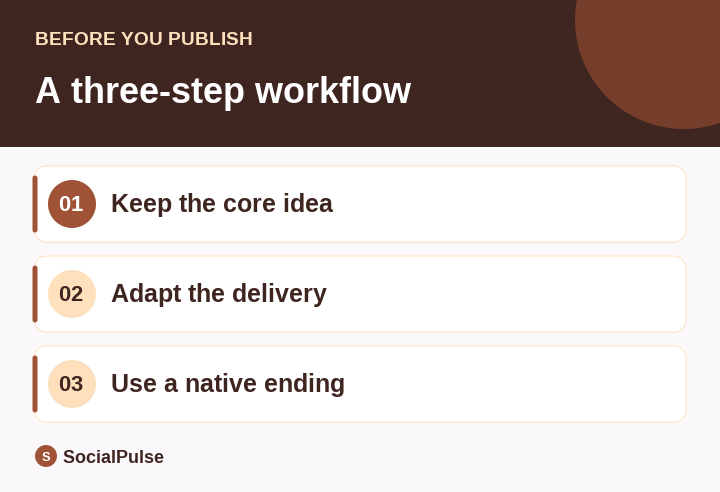
A tutorial may become a short demonstration, a written checklist, or a discussion prompt. Rework the opening, pacing, dimensions, captions, and next step so the new version feels native to its purpose. Keep the underlying information accurate, and link to the fuller resource only when it adds something the short version cannot provide.
Track what each adaptation teaches you
Record the source idea, the adaptation, and the response to each version. The aim is not to flood every channel with identical posts; it is to learn which presentation helps which audience. Retire adaptations that require too much work or lose important nuance. Preserve source files and credits so the origin of the work remains clear.